Understanding the December “half tax” system as an international in Norway
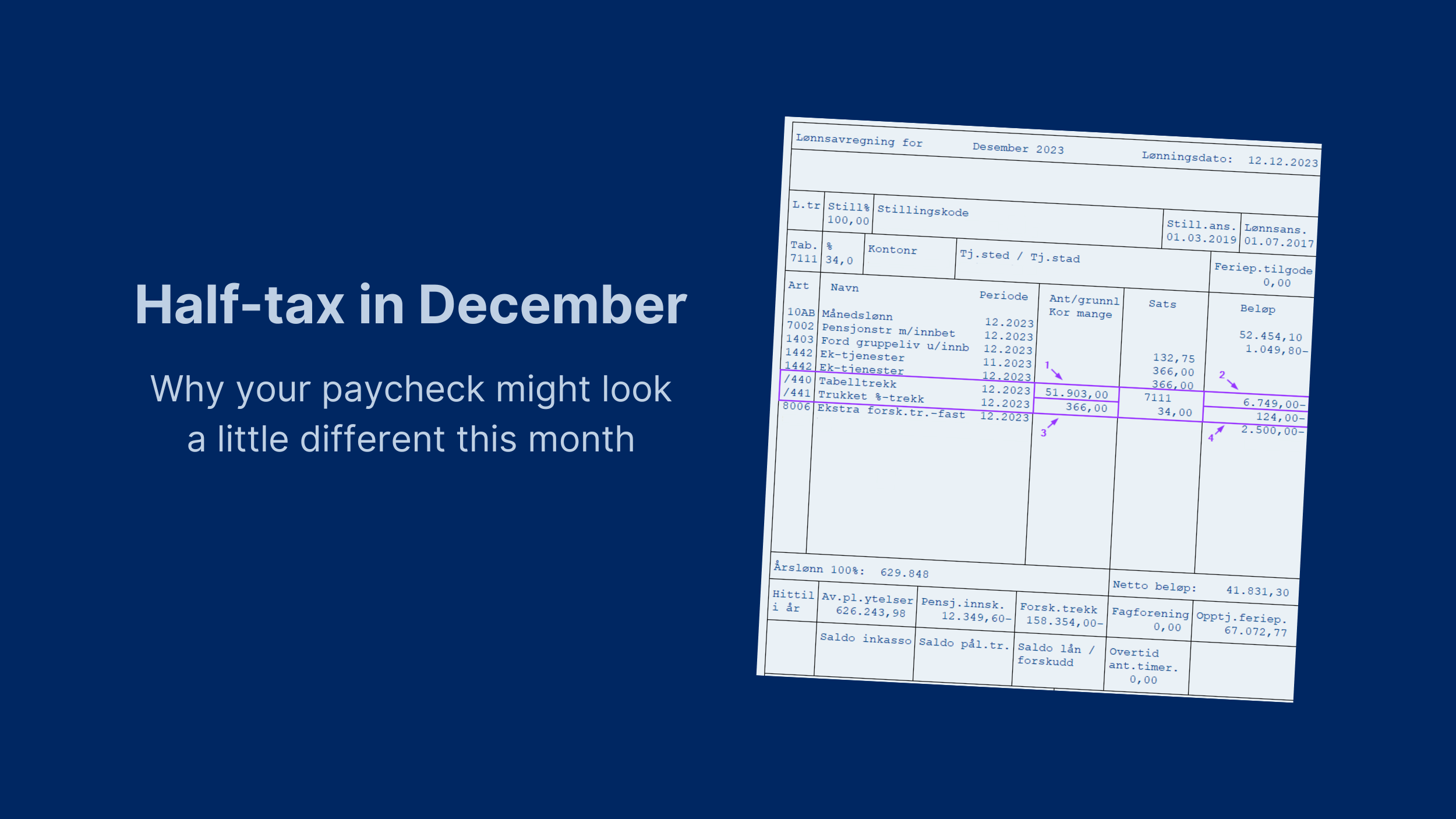
In your first December in Norway, you might hear the term “half tax” thrown around like it’s a Christmas bonus.
And when you check your payslip (or at least your bank account, if you’re like me and don’t look at the paperwork…), things might look a little different. You probably will have more money than expected, and you might even get paid earlier than usual.
As a newcomer to Norway, you can easily assume you’re were getting a little holiday gift from the state! But that’s not exactly the case…
The halv skatt (“half tax”) system isn’t a bonus at all—it’s a redistribution system that gives employees more spending room in December or November, without changing the total amount of tax they pay.
Here’s what halv skatt really is, who it applies to, and why it says so much about how Norway organizes work and income.
Half-tax isn’t a bonus, it’s budgeting built into the system
Every year, most Norwegian employees pay higher tax for 10.5 months, and then less in June and either November or December. The total tax you pay doesn’t change. Nothing is “extra.” It’s just redistributed.
The idea is simple: You get slightly more money during the two periods when expenses usually rise—summer and Christmas.
This long-standing policy is designed to give families more disposable income ahead of Christmas, helping them cover the costs of gifts, travel, and celebrations.
The tax system is quietly preparing for all of that, whether you asked for it or not.
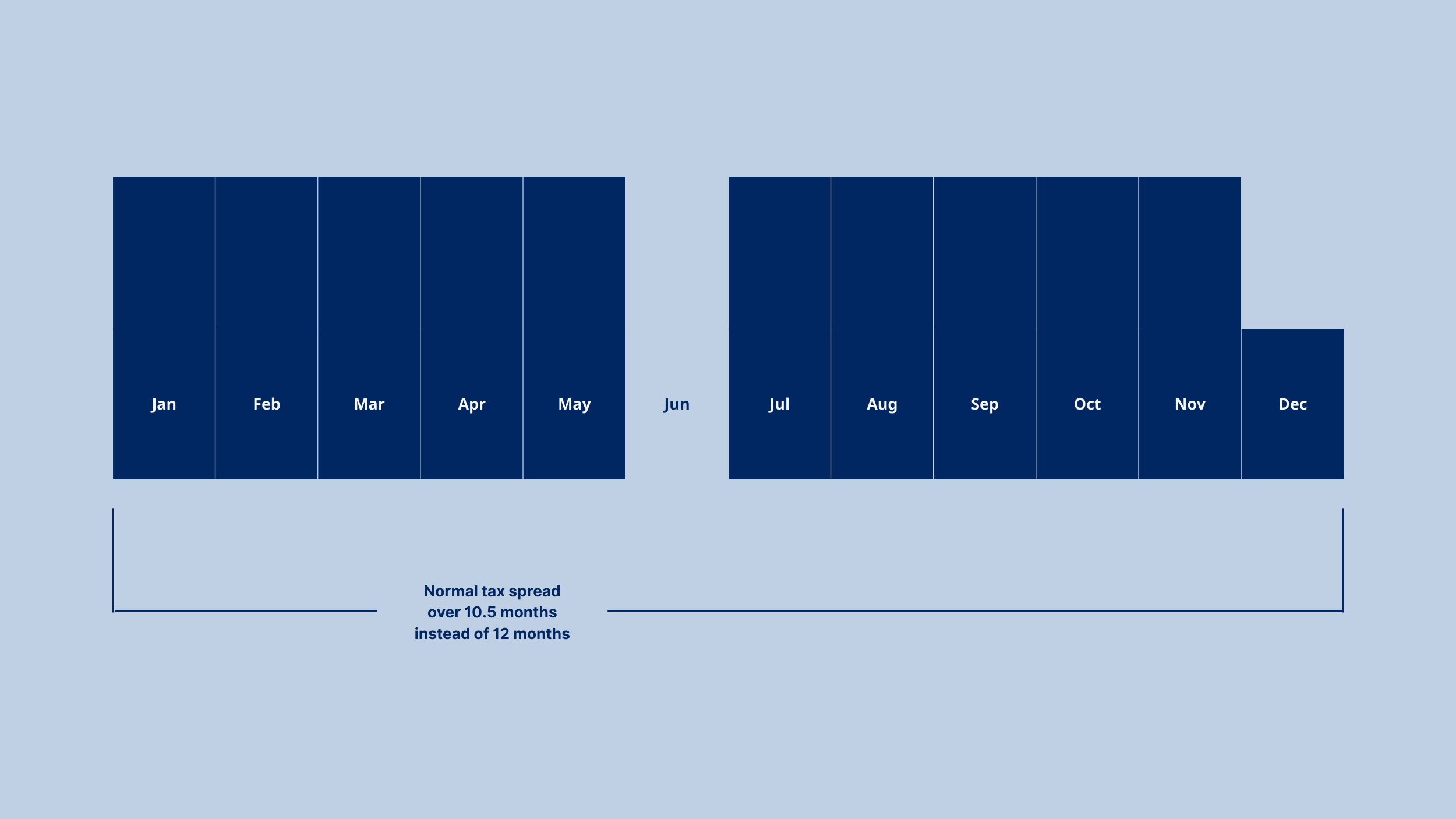
By paying slightly more tax in other months, you then pay no tax in June and 50% tax in December, but that doesn’t equal more money for you.
How it works
The rules around halv skatt are straightforward:
Employers choose if they apply it in November or December.
You can talk to your employer and ask to change the month, or even to pay full tax if you want to receive a bigger tax return next year.
If you’re paid weekly or hourly, only the last weeks before Christmas may get reduced tax.
If you’re not sure what your workplace does, check last year’s payslips or ask HR; they should be very used to this question.
You might receive your paycheck earlier than usual as well (which also means more time until your next one, so budget wisely!).
And if you freelance, halv skatt doesn’t apply at all. You simply pay tax based on your income and advance payments, without these seasonal adjustments.
It’s easy to think of halv skatt as a fun December perk, but it also reflects something deeper in Norwegian systems.
Norway is structured around predictability and stability, even in personal finances. Instead of giving you the same tax withdrawal every month and letting you deal with holiday expenses alone, the system shifts things around so December and summer feel a bit easier.
A small reminder that in Norway, the state isn’t just collecting your tax. It’s quietly smoothing out your financial year.